English│日本語
The Sacred Kinki Pentagram, Jomon Matama, and Asuka-ni-Imasu Shrine
Furthermore, this land lies within the area of the Kinki Pentagram, a vast spiritual geometric formation. It preserves a vision of what may be understood as an ancient prototype of the Shinto shrine—a place embodying harmony between nature and humanity.

The Kinki Pentagram and Jomon Matama
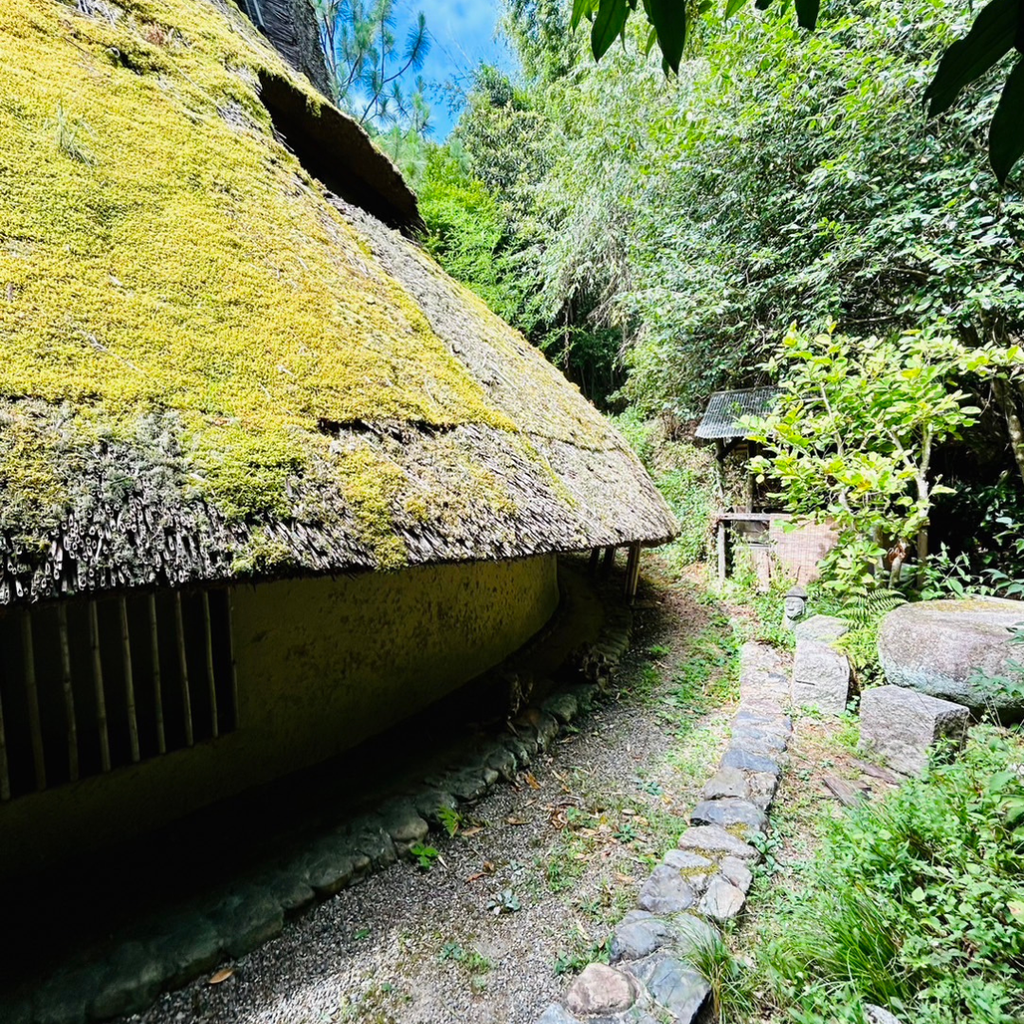
Photoo by Nyaro san
Since ancient times, the origins of Japanese shrines and places of spiritual reverence existed long before formal shrine buildings were constructed. Their roots lay in nature itself—in sacred rocks, trees, springs, and the very ways of life practiced by the Jomon people, who expressed gratitude for the natural order and all living things.
The ancient waterways dating back approximately 16,000 years, believed to lie beneath the land at Sendaiji, offer a glimpse into this relationship between people and nature. Long before buildings were erected as places of worship, the land surrounding Jomon Matama may have served as a place where heaven and earth, humanity and nature, were connected through reverence for the natural world.
Jomon Matama, located in Sendaiji, lies not only within layers of history, but also within the symbolic landscape of the Kinki Pentagram—a star-shaped formation traced by connecting five sacred sites: Ise Jingu, Kumano Hongu Taisha, Izanagi Jingu, Moto-Ise, and Mount Ibuki. This land rests within the quiet sphere of this greater spiritual geometry.
Sound Offering in front of the Great Sacred Mirror at Asuka-ni-Imasu Shrine
Guided by this profound connection, Jomon Matama received generous advice and support from the 87th Chief Priest and the 88th Female Chief Priest of Asuka-ni-Imasu Shrine, one of Japan’s oldest shrines, which continues to preserve the vitality and spiritual traditions of ancient times.
Under their warm guidance and watchful care, I had the opportunity to offer a musical performance before the shrine’s venerable Great Sacred Mirror. This experience strengthened my sense of the deeper essence—the core—that flows through this land and my work.
The ancient origins of shrines reaching back to the Jomon era, the sacred arrangement represented by the Kinki Pentagram, and the musical offering at Asuka-ni-Imasu Shrine…
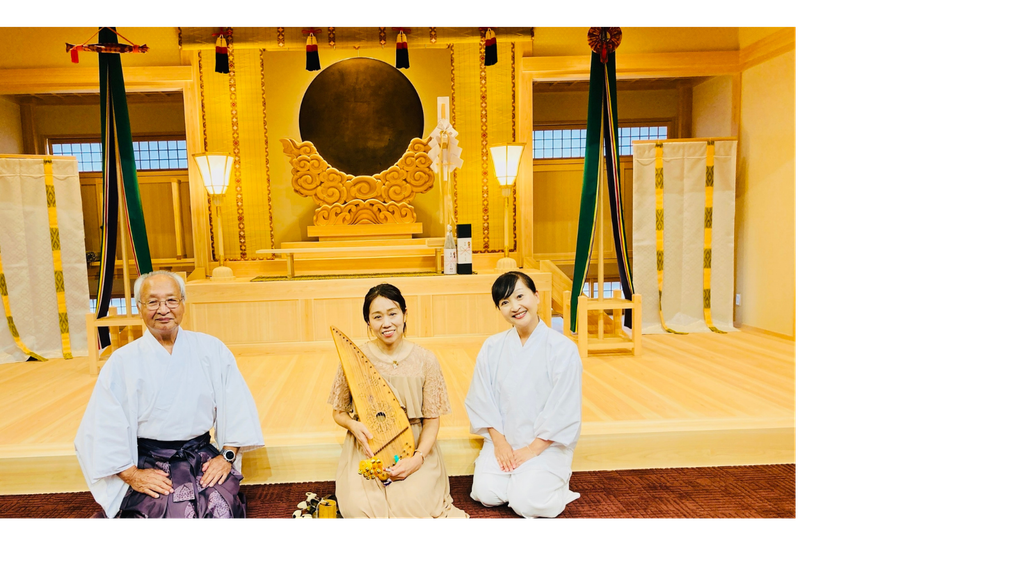
With the 87th Chief Priest of Asuka-ni-Imasu Shrine and, on the right, the 88th Female Chief Priest.
Here, where the visible layers of history intersect with the invisible connections of prayer, the “Rock Door of 16,000 Years” is now beginning to open once more.