English│日本語
Ancient Wisdom Rediscovered Through the Village Chief’s Intuition
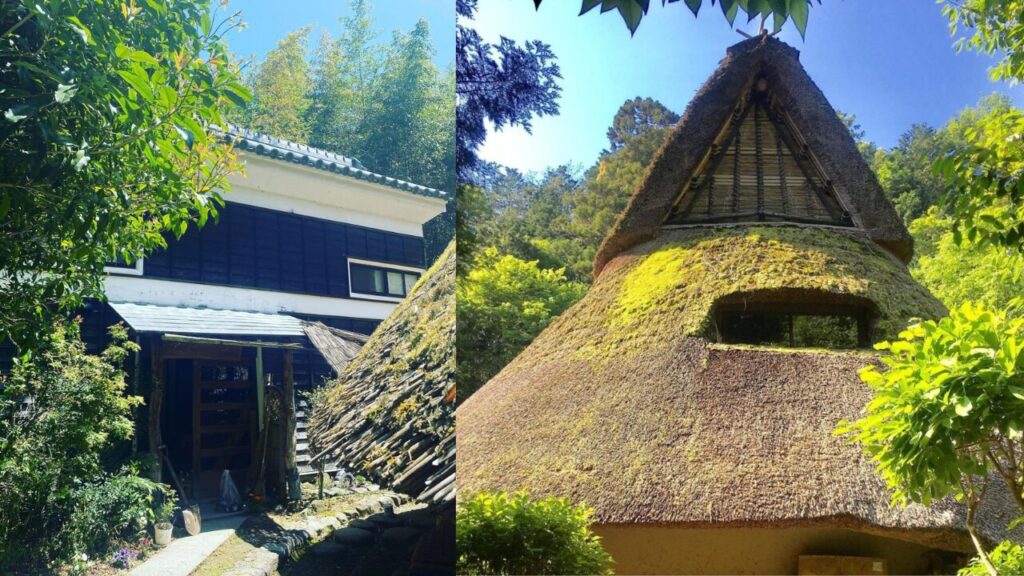
Decades before archaeological excavations took place, when there was still no scientific evidence to support the idea, the founder, Village Chief Tachibana, felt an irresistible calling.
“The roots of humanity lie in the Jomon period. We will build a Jomon pit dwelling right here on this land.”
His powerful intuition and unwavering passion seemed to be guided by the ancient Jomon memories held within this very land.
The archaeological findings unearthed in Sendaiji in 2013 would eventually provide compelling objective evidence, affirming the historical significance of the very place that the Village Chief had devoted his life to protecting.
Discover the Jomon Archaeological Discoveries
The “Nenzureba Hana Hiraku” Monument and the Poet Shinmin Sakamura
Several decades before the construction of Jomon Matama (formerly Madama Village), the renowned wandering poet and spiritual teacher Shinmin Sakamura visited this land.
He gently pressed his forehead against the earth and exclaimed.
“An extraordinary energy flows through this place.”
(A few decades later, archaeological excavations in this very area would uncover traces of a Jomon settlement dating back more than 10,000 years, along with a vast number of ancient artifacts.)
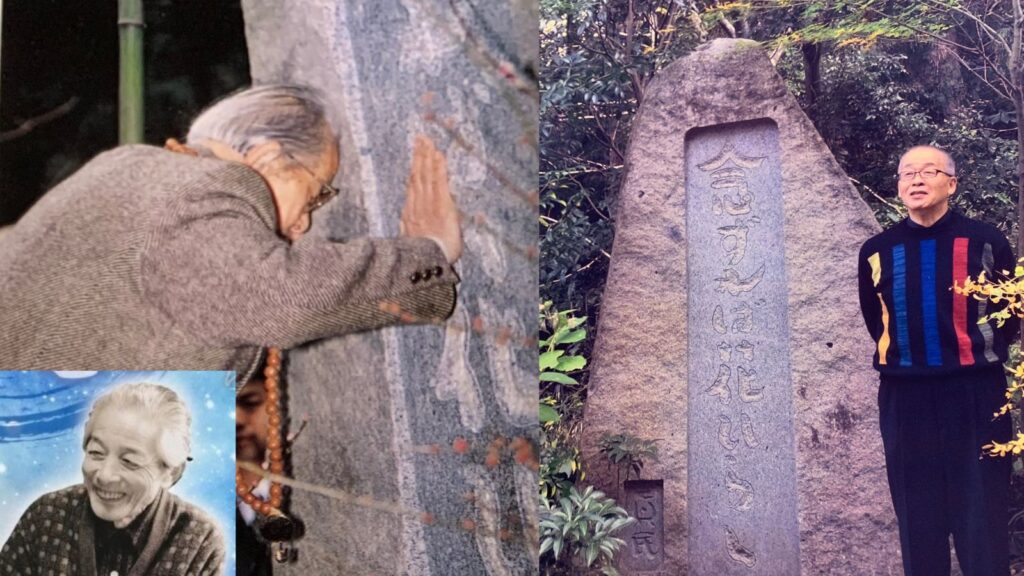
(Left) Shinmin Sakamura touching his forehead to the stone monument. (Right) Mr. Tachibana, founder and village chief of the former Madama Village.(Jomon Matama)
After the building was completed, Master Shinmin stayed here for several days, generously creating dozens of calligraphic works for the community without charge.
Among them was “Waraku” (Harmony and Joy), a large calligraphic work the size of a tatami mat, which became the central spiritual axis of the building.
Another treasured legacy is the stone monument bearing his most famous words:
“Nenzureba Hana Hiraku” — “With sincere thoughts and perseverance, flowers will bloom.”
The monument was erected through the collective prayers, hopes, and heartfelt wishes of more than 10,000 people.
Master Shinmin cared for this place with profound affection. He even told the family:
“If you ever find it difficult to maintain this building in the future, sell my calligraphy.”
The many works he created at Jomon Matama were later compiled and published in a book titled Sho wa Kokoro (“Calligraphy Is the Heart”).
The book is now out of print. Whether it will be republished will depend on the future direction and activities of Jomon Matama.
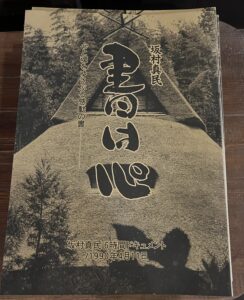
A Story of Master Shinmin, Told by the Village Chief of Matama
A video in which the village chief of Matama shares his memories and stories of Master Shinmin Sakamura.
27 Years of Café Restaurant Operations From Opening to Closure
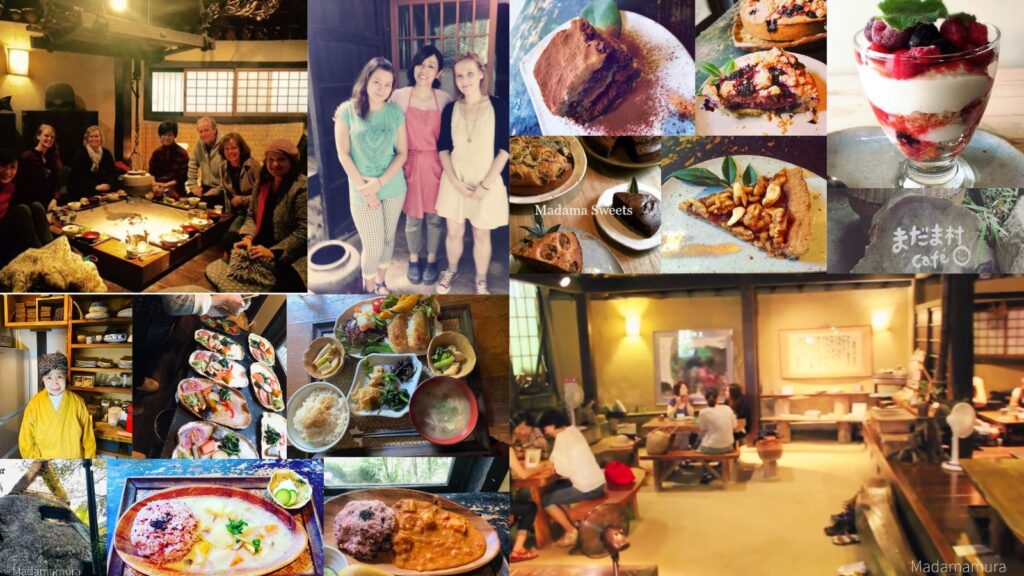
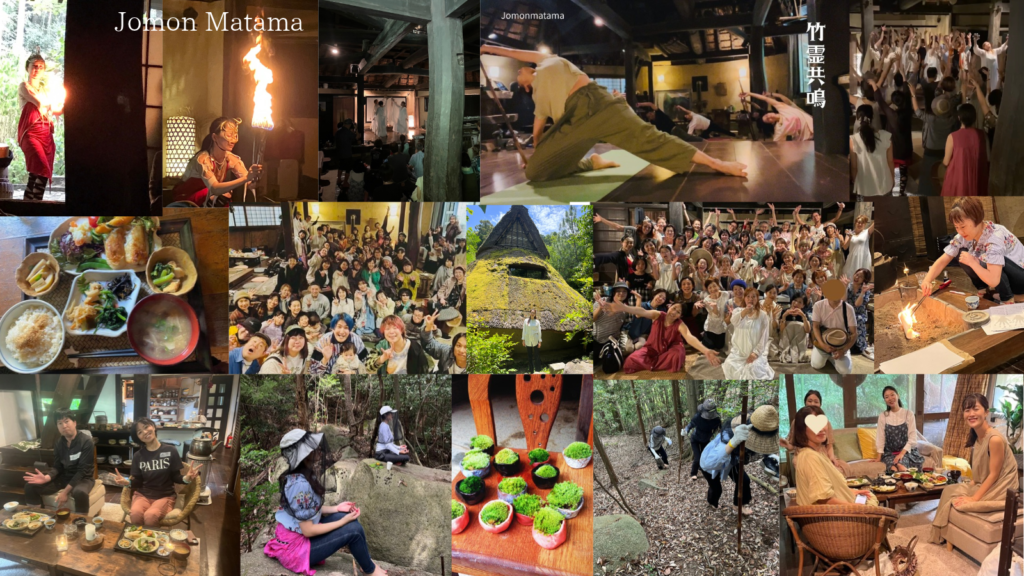
Jomon Matama (formerly Madama Village) operated as a café restaurant for 27 years, welcoming countless guests not only from across Japan but also from all around the world.
Throughout those 27 years, we prepared meals with love and dedication, focusing on brown rice and naturally plant-based cuisine, without meat or fish. We also created a variety of sweets, including options made without eggs, dairy products, butter, sugar, or wheat flour. We offered these choices with the hope that food could become a gateway to greater awareness and positive change in people’s lives.
At the time, the idea of a hidden retreat-style café tucked away deep in the mountains, attracting visitors from far and wide, was something quite extraordinary. Word of mouth spread rapidly, and media coverage brought attention to the café throughout Japan and eventually around the world.
However, while the café Restaurant was loved by so many people, a growing sense of unease was quietly taking shape within us.
Day after day, enormous amounts of waste accumulated. We were constantly racing against time, gradually exhausting ourselves both physically and mentally.
We began to ask ourselves,
“Is welcoming such large numbers of guests truly what our father envisioned when he spoke of ‘a beautiful heart’ and ‘a life enriched with grace and fulfillment’?”
We also felt increasingly concerned that most of the café’s revenue was being consumed by roof repairs and ongoing maintenance. Deep down, we knew that something about the way we operated had to change.
We began to question the consumption-driven business model of modern society and to reflect on whether our own way of operating had, in fact, drifted away from our father’s founding philosophy…
The Passing of the Village Chief and the Collapse of the Thatched Roof
Even after the café Restauranclosed, we continued to explore new ways to share the spirit of Jomon Matama. From time to time, we held Jomon retreats and special gatherings, including meditation, Jomon calligraphy, magatama bead-making, prayer gatherings, cherry blossom celebrations, and community markets. These experiences offered opportunities to reconnect with nature and bring the body, mind, and spirit into harmony.
Just as we were continuing to search for a new direction, the founder of Jomon Matama (formerly Madama Village), our beloved Village Chief, passed away.
Around the same time, the roof of the building collapsed.
These events marked a turning point, bringing all activities and operations at Jomon Matama to a temporary halt.
The building was damaged, and the flame of Jomon Matama seemed on the verge of going out. Yet, even in the midst of despair, what gave us the strength to rise again was the warmth of human connection.
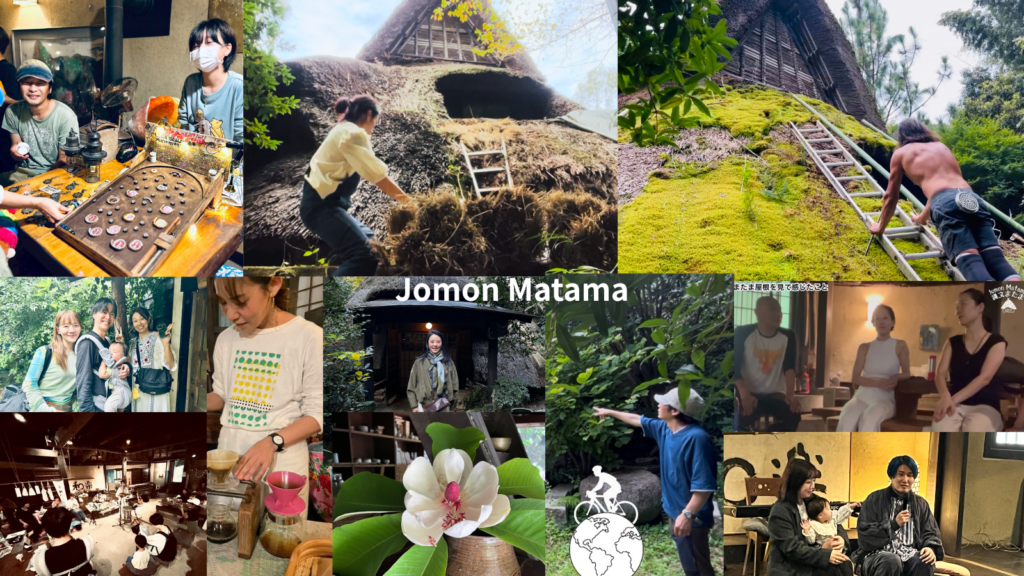
When longtime café Restaurant guests learned about the roof collapse, many reached out to help. Former staff members and their friends joined forces to support fundraising community markets for the roof restoration. A dear friend even came all the way from Canada, while others personally volunteered their time and skills to help repair the roof.
People from many different fields also came forward, offering their heartfelt advice, support, and helping hands as we began to envision a new future for Jomon Matama.
The Jomon Flame Is Now on the Verge of Fading
Since then, the deterioration of Jomon Matama’s thatched roof has continued. Without securing the funds needed for reconstruction, we are approaching a point where the building may have to be dismantled within the next two years.
Rebuilding a structure like this on a historic site where traces of an ancient Jomon settlement remain would be an enormous challenge.
And yet, I cannot bear the thought of allowing the invisible Jomon flame — a spiritual current, almost like an ancient lifeline flowing through Jomon Matama on this land where Jomon archaeological remains lie dormant — to be extinguished.
With only two years remaining, rather than mourning what may be lost, I want to turn my attention to the possibilities that still remain here and do everything within my power to carry this legacy into the future.
We choose to see these events not simply as a disaster or an ending, but as the beginning of Kintsugi — the art of bringing broken things together to create a new kind of beauty.

Kintsugi is a traditional Japanese art and philosophy in which broken pottery is not concealed or discarded, but carefully restored with gold, transforming it into something even more beautiful and meaningful than before.
With this spirit, we hope to bring together the love and vision our father, the Village Chief, left behind; the prayers of Master Shinmin; the estimated 16,000-year history of this land, whose roots reach back to the Early Jomon period; and the love and generosity of all those who have come forward to help us.
With all our hearts, we are committed to bringing Jomon Matama back to life as a place where people from around the world can rediscover love and harmony.
The Dawn of 16,000 Years. The Jomon Rock Door Opens.
After 16,000 years, something is beginning to awaken.
Please join us as we witness this story of a gentle new dawn emerging from the ruins.
Subscribe to our channel and become part of this journey.